Partial Reprogramming by Gene Therapy in Aged Mice: Longer Life and Signs of Age Reversal
Researchers report that a gene therapy designed to induce partial cellular reprogramming in naturally aged mice extended lifespan and shifted some molecular and tissue features toward a younger profile. We outline what was tested, why it matters, and the open questions.
Key idea, in plain language
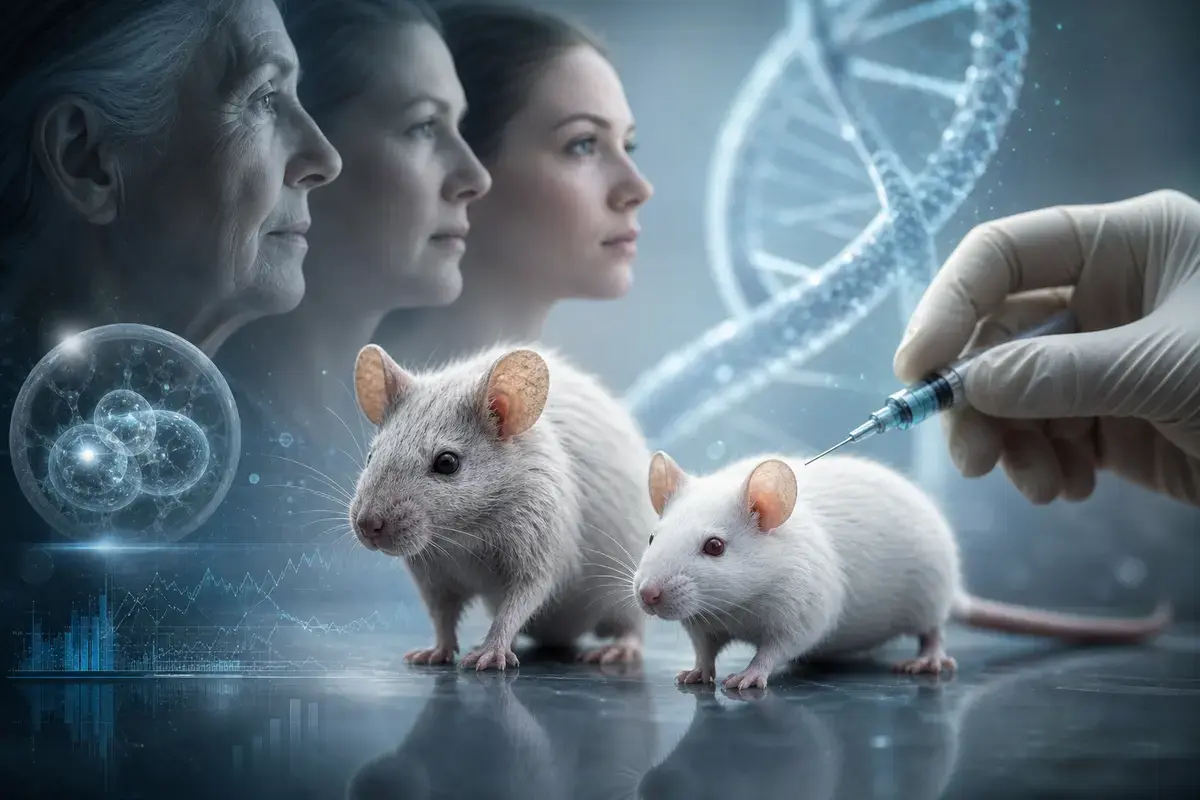
A gene therapy designed to trigger partial cellular reprogramming in aged mice extended lifespan and shifted some molecular and tissue features toward a younger state. The goal is to nudge cells’ epigenetic settings without erasing cell identity. These are animal data; safety and efficacy in humans are unknown.
Why this matters
If some age-related changes can be safely reversed, it might help delay age-related disease. This study stands out because it used naturally aged mice, delivered the intervention with a gene therapy system, and reported both lifespan gains and movement of aging markers in a youthful direction.
What the researchers actually did
- Used a gene therapy approach to enable partial reprogramming in vivo (temporary expression of factors that reset some epigenetic marks while preserving cell type).
- Treated old mice, tracked survival, and measured age-associated features in tissues and molecular markers.
- Found that treated animals lived longer and some aging readouts shifted toward a younger profile.
Protocol details (vector, factors, dose, schedule) are not summarized here. Please consult the original paper for methods and exact numbers.
What changes in our understanding
- Partial reprogramming is moving from accelerated-aging models into naturally aged animals, increasing relevance to typical aging.
- Biomarkers of “biological age” and tissue features can shift with this approach, but these remain proxies that need careful validation.
- Delivering reprogramming via gene therapy raises practical questions about control: how to turn expression on and off, dose it safely, and target the right tissues.
What this means for real life right now
- No demonstrated benefit or safety in humans yet. Mouse results often do not translate directly to people.
- DIY or unregulated use of reprogramming factors is unsafe. Potential risks include tumors, loss of cell identity, organ damage, and immune reactions to vectors.
- Early human trials, if they appear, should prioritize safety, precise control (reversible on/off), and preservation of normal cell function before any healthspan claims.
Evidence quality and statistics
- Study type: animal experiment. Stronger than cell culture, far below clinical trials.
- Endpoints: lifespan (a hard outcome in mice) plus biomarkers of aging (surrogate outcomes that require independent validation and reliable measurement).
- Without reported effect sizes and confidence intervals here, the magnitude and robustness of benefit cannot be judged.
- Likely conducted within a single research program; independent replication is needed.
Limitations and open questions
- Safety: tumor formation, loss of cell identity, fibrosis, organ dysfunction, and immune responses remain core concerns.
- Control: how to dose and time expression to reset epigenetics modestly without pushing cells toward de-differentiation?
- Delivery: systemic gene therapy faces immune responses, tissue targeting limits, payload constraints, and challenges with repeat dosing.
- Tissue differences: aging varies by organ; one schedule may help some tissues but harm others.
- Human translation: species differences in lifespan, cancer risk, and gene regulation are substantial; dosing or timing cannot be extrapolated directly.
Practical takeaways for readers
- Treat aging biomarkers as informative but imperfect; they are not health outcomes by themselves.
- Look for rigor in future work: preregistration, blinding, independent biomarker validation, control of batch effects, and reproducibility.
- In early human studies, prioritize safety, reversibility and control of gene expression, and multi-tissue health measures.
- Avoid unregulated interventions; gene therapy belongs only in approved trials under specialist oversight.
Short glossary
- Partial reprogramming: temporary expression of factors that partly reset a cell’s epigenetic state without fully erasing identity.
- Gene therapy: delivery of genetic material to change gene expression, often using viral-like vectors.
- Biological age: an estimate of body state based on biomarkers (for example, DNA methylation patterns), not calendar time.
- Epigenetics: chemical marks on DNA or proteins that regulate gene activity without changing DNA sequence.
- Surrogate endpoint: a biomarker used as a stand-in for a clinical outcome; useful but not the outcome itself.
- Batch effects: shifts in measurements due to differences in sample processing or assay runs.
Disclaimer
This article is for education only and is not medical advice. Do not use this information to diagnose or treat any condition. Discuss health decisions with a qualified clinician.
Sources
- Original publication: https://pmc.ncbi.nlm.nih.gov/articles/PMC10909732
- DOI / PubMed: PMC10909732